How Much Does It Cost to Build a Data Center in Space: The Economics of an Orbital Data Center
Universal computing will only compete with ground-based systems if launches are cheap and data exchange is limited
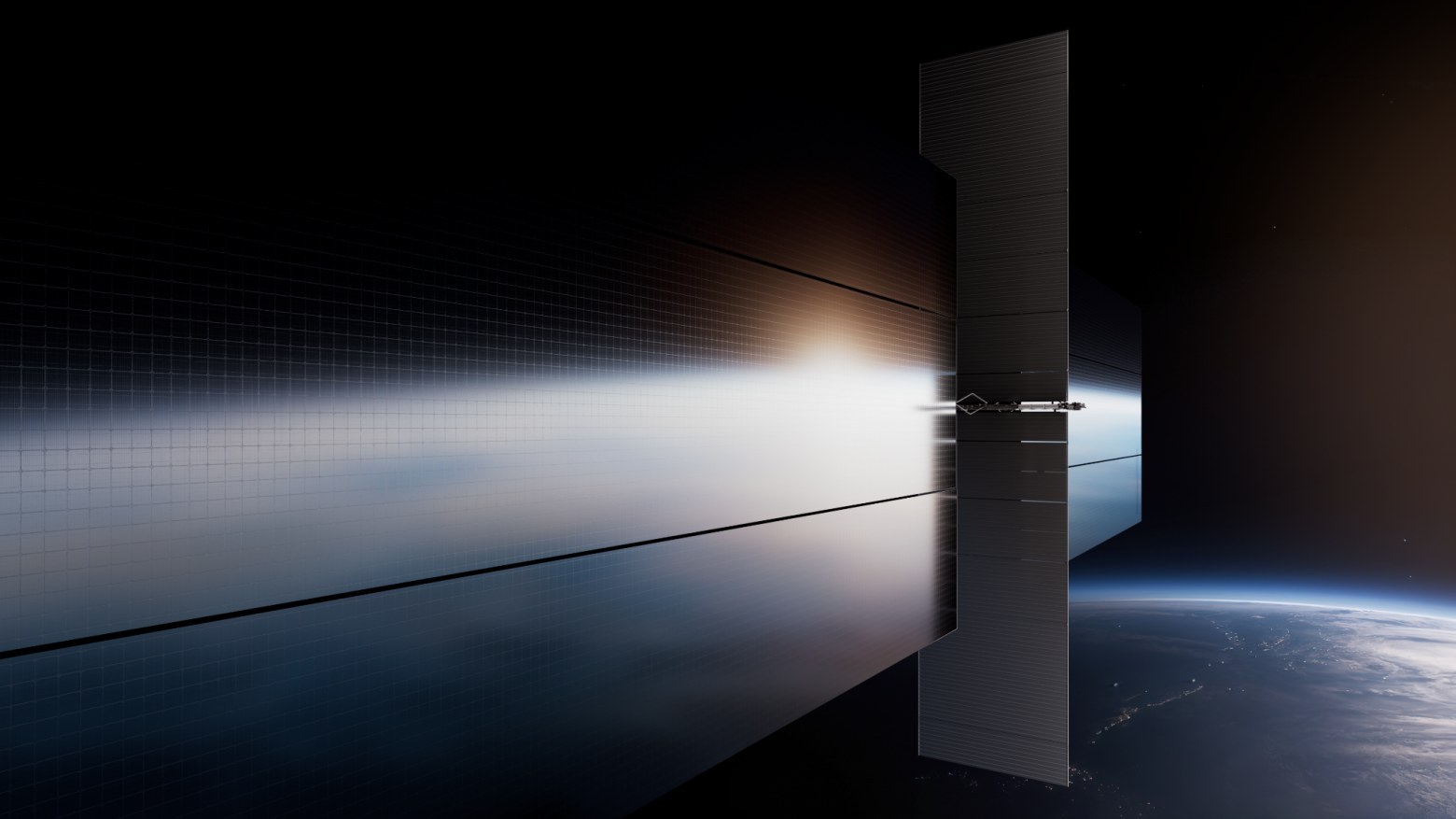
Physicist Vyacheslav Turyshev from NASA's Jet Propulsion Laboratory views orbital data centers as systems with distinct economic models. One option processes data directly on the satellite and transmits only the results to Earth, the second utilizes the computational power of an existing satellite constellation, and the third performs universal tasks for ground-based users.
Processing data in orbit can reduce the volume of information that needs to be transmitted to Earth. In experiments with Sentinel-2 imagery, transmission was reduced by 99.7–99.99%, and in 3D reconstruction, by 99.49%. However, the computations were conducted on Earth, not on the satellites.
For universal computing, Turyshev compared space infrastructure with a ground-based data center. In calculations for a 1 MW system with a mass of 40 kg per kilowatt, manufacturing and launch costs should not exceed 250–1,000 dollars per kilogram. According to his estimate, a launch on a Falcon 9 alone costs 3.4–13.5 times more than this limit—without accounting for satellite construction, communications, operations, and other expenses.

The article also examines a 13 kW module separately. Including auxiliary systems, its total power consumption amounts to 15.6 kW. Operation requires solar panels, batteries for eclipse periods, and radiators: in space, heat is dissipated through radiation. In low Earth orbit, the spacecraft regularly enters Earth's shadow; a terminator sun-synchronous orbit provides more illumination time, while a geostationary orbit ensures a constant position over one point but increases demands on communications and equipment delivery.
The author considers early applications to include on-satellite data processing and computing integrated into communication systems. Universal tasks for ground-based users may become competitive with low-intensity data exchange with Earth, high equipment utilization, long operational lifespans, and very low combined costs for launch and spacecraft construction.