McKinsey Identifies Trends That Could Impact Business in 2027
Agent AI, robotics, cybersecurity, and other areas deserving special attention
In 2025, investments in AI infrastructure and model architectures reached $145 billion. In the Technology Trends Outlook 2026 study, McKinsey analysts highlighted 14 technologies that are transforming the economy and corporate processes.
One of the key areas is agent systems. These can independently plan multi-step tasks, work with corporate services, evaluate results, and adjust their actions without constant human involvement. In 2025, investments in agent AI reached $9.9 billion.
Such tools are also used in software development. Specialized agents can write code, run tests, find and fix errors, and assist with application deployment. However, by 2027, companies will need to determine how reliably and safely to integrate such systems into workflows.

AI is increasingly used in scientific research. It helps formulate hypotheses, design experiments, analyze materials, and identify compounds that could form the basis for drugs. In biopharmaceuticals, this accelerates the selection of candidates for drug development, while in materials science, it aids in studying new compounds.
However, the results of models still require laboratory verification. Identified compounds need to be synthesized and tested, and drug development continues to involve clinical trials and regulatory procedures.
The growth in AI services increases demand for computing power. Training models and processing requests require data centers, cloud platforms, and specialized processors. Amazon, Google, Meta, and Microsoft are developing their own chips and collaborating with manufacturers to handle AI workloads more efficiently.
In the coming years, competition will be determined not only by hardware performance. The cost of computations, component availability, and energy efficiency will also play a significant role. In 2025, investments in specialized semiconductors amounted to $41.6 billion.
A separate constraint for AI development is energy. Data centers can be built faster than the necessary grid infrastructure. Connecting new facilities requires power lines, transformers, and substations, and in some regions, transformer deliveries already take over two years.
According to McKinsey, by 2030, data centers in the U.S. serving AI workloads could consume as much electricity as the state of California currently uses. In 2025, investments in energy and sustainable technologies totaled $194.2 billion. This sector includes energy storage, grid modernization, renewable and nuclear energy, as well as hydrogen technologies.
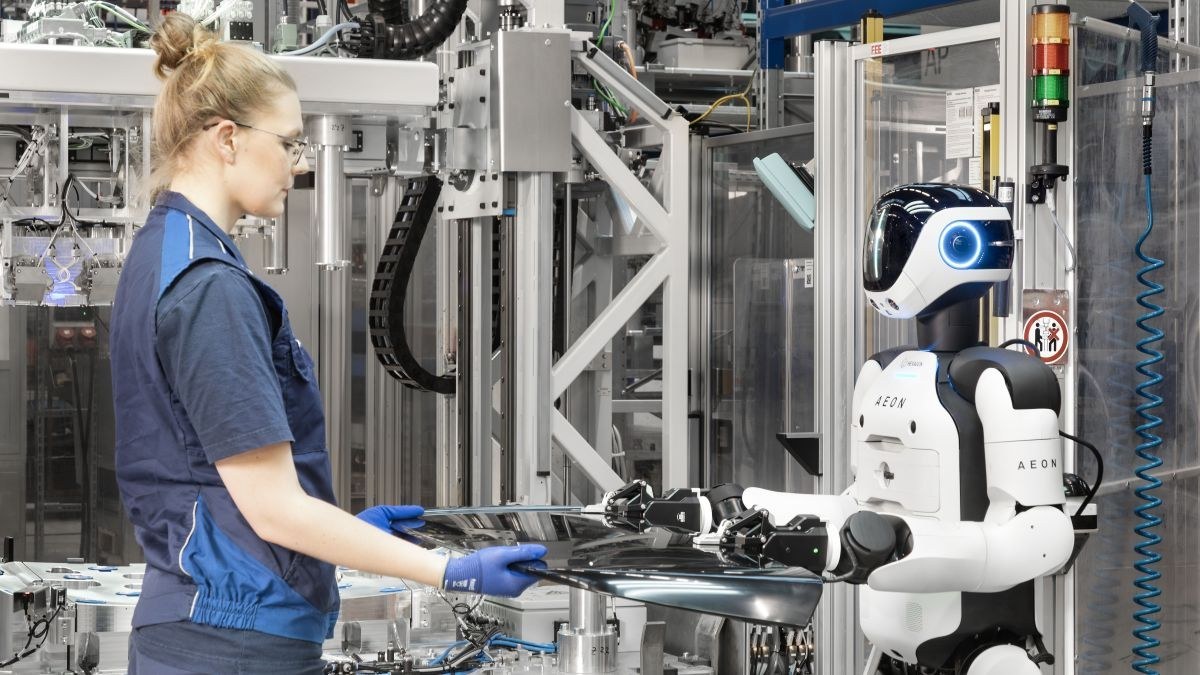
AI is also transforming robotics. So-called physical AI combines artificial intelligence, sensors, and motion control systems. This enables machines to perceive their environment, adapt to changes, and independently choose action sequences, unlike traditional industrial robots.
Currently, the main applications of such systems are in manufacturing and logistics. Robots move goods and perform repetitive tasks. In the future, the technology could expand into construction, agriculture, and medicine. Investments in robotics reached $19.5 billion in 2025, and further development will depend on companies' ability to integrate autonomous systems into real-world production processes.
At the same time, AI raises cybersecurity requirements. It helps specialists quickly identify vulnerabilities, analyze code, and detect suspicious activity, but the same tools can be used to prepare more sophisticated attacks.
The McKinsey study states that over three-quarters of the vulnerabilities discussed in the report fall into the zero-day category. These are security issues for which an exploitation method already exists at the time of public disclosure. In 2025, investments in cybersecurity and trusted systems amounted to $77.5 billion. As AI adoption grows, companies will need to pay more attention to data protection, access control, and verification of autonomous system actions.
Beyond these areas, quantum technologies, advanced communications, immersive technologies, the future of mobility, space technologies, and biotechnologies could also influence the market.
Quantum computers, communication systems, and sensors open new possibilities for computation, modeling, and information security. The development of 5G, future 6G networks, Wi-Fi 7, and satellite communications accelerates data exchange between devices and systems.
Augmented, virtual, and mixed reality, as well as smart glasses, are changing how digital information is used. Electric vehicles, autonomous transport, drones, and air taxis are shaping new models for moving people and goods.
Satellite communications, Earth observation, and orbital infrastructure are expanding commercial space services. The combination of AI, biology, chemistry, and engineering helps create drugs, diagnostic methods, and new materials.
According to McKinsey, five areas could receive more than double the investments in 2026 compared to the previous year. The list includes agent-based software development, AI infrastructure and model architectures, AI for scientific discoveries, space technologies, and robotics.
The assessment is based on investments in the first half of 2026 and extrapolation of current growth rates. It shows which technologies are attracting investors but does not guarantee future returns.
The main conclusion of the study is that technological competition extends beyond creating AI models. In 2027, companies' advantages will also depend on access to computing power and energy, security levels, and the ability to implement new solutions in real business processes.